

How to compare two port-to-port freight quotes
Two offers can name the same ports and still leave the buyer paying for different work. Before comparing the bottom lines, put each quoted charge beside the stage it covers and identify who will take responsibility for the next handover.
 AI-generated illustration
Put the same shipment at the top of both offers
Write down the loading port, discharge port, commodity, packed quantity, container requirement or LCL measurements, and expected ready date. Record the currency and validity of each offer. If one quote uses an earlier packing list or a different destination terminal, ask for a revision before comparing totals.
Describe how the cargo reaches the loading side. A factory pickup and a supplier delivery to a designated receiving point involve different work before the ocean leg. If you need the goods at an inland address, identify that address as a separate requirement.
Mark who pays for each stage
Copy these rows into a comparison sheet and add a column for each offer. For each row, record the quoted amount and currency, “payable separately” or “awaiting confirmation”. A blank line deserves a question before you count it as zero.
| Stage | Question to resolve |
|---|---|
| China-side receiving | Who pays for collection, receiving or loading, and where does the quoted work begin? |
| Ocean carriage | What equipment or chargeable shipment size is priced, and what supplements are listed? |
| Destination port | Which terminal, release or handling charges are included, and which will the receiver pay locally? |
| After the port | Who arranges customs clearance, duties where applicable, collection and final delivery? |
Ask the receiver to confirm the handover
Give the receiver the proposed port and the exact point at which the quoted service ends. Ask who can accept the handover there and who will arrange the onward leg. Have the provider identify any amount that is an estimate and any item that depends on the final packed measurements or booking date.
For KFY’s core sea freight services, the usual endpoint is the agreed destination port. If the buyer needs additional work beyond that point, specify the task, ask who would perform it and obtain its scope in writing before comparing it with an offer that already includes it.
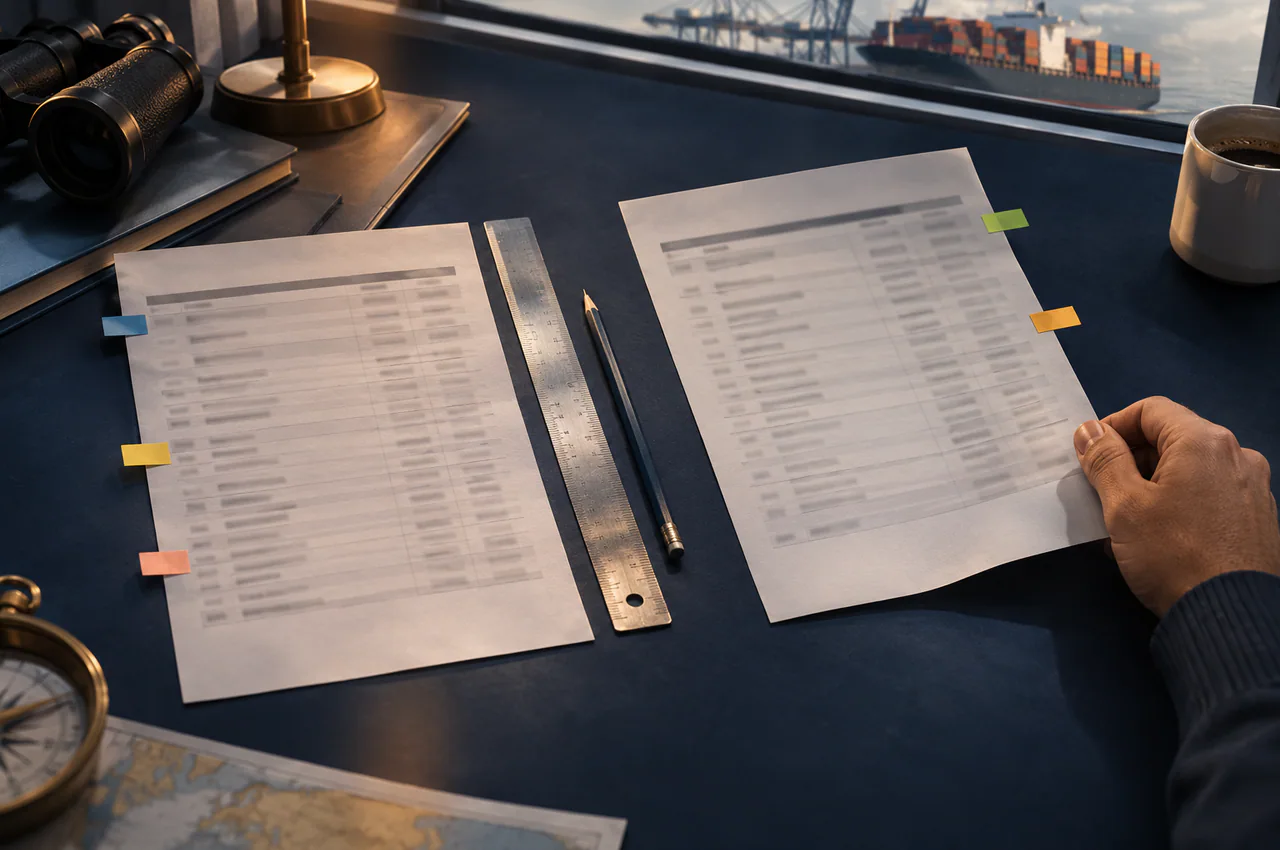
A comparison of two offers to the same port
Offer A includes carriage to the named port and lists destination handling as payable by the receiver. Offer B includes a named terminal handling item, with cargo release still shown separately. Ask the receiver for the missing local charges in each case. Until those amounts and the release point are clear, the smaller invoice total does not tell the buyer which option costs less overall.
A comparable offer identifies the load, validity, included charges and the exact point where the receiver takes over.
Review the port-to-port shipping scope